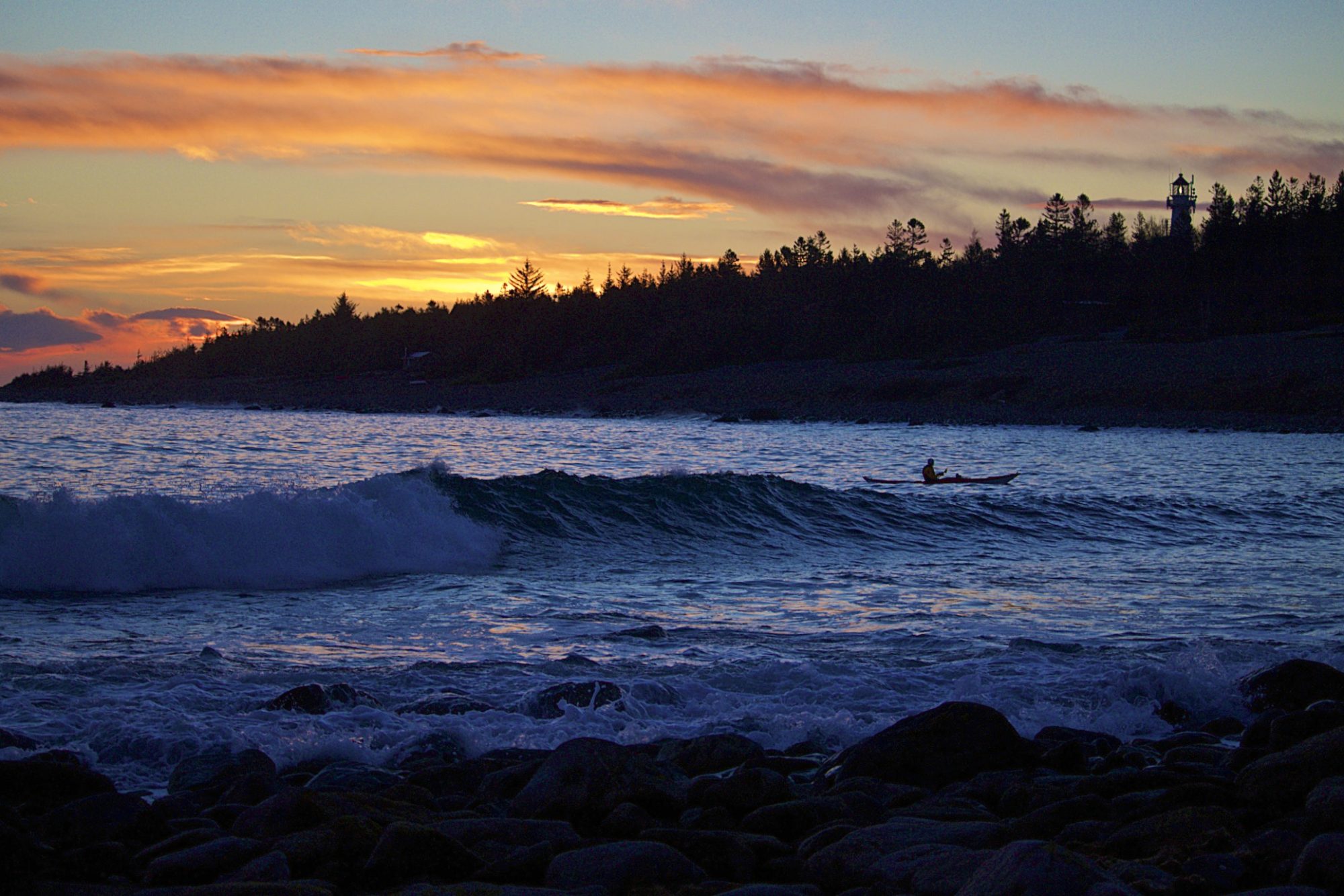
Welcome to the ISKGA Coastal Guide program. On this course you will paddle, camp, and lead in some of the most demanding coastal terrain Norway has to offer — surf, rock gardens, all kinds of weather, and long days that don’t always end when the light does. This course does not simply teach you to guide; it asks you to become the person who can be trusted with other people’s safety in a hostile environment, in the dark, when things stop going to plan. That responsibility starts before you arrive: in the kit you pack, the reading you do, and the standard you hold yourself to from this moment on. Bring your full effort, look after each other, and use the weeks ahead to build the judgement, resilience (physical and mental), and leadership that this qualification represents. We’re looking forward to working alongside you.
Kit List
This is a minimum kit list. You are responsible for ensuring you have what you need to stay strong and operational as a leader, in all weathers, for the duration of this course. Think like a leader from this moment — this course is about leadership, and it starts now.
It is autumn in Norway. Expect rain and wind.
Boat and paddling equipment
- Sea kayak
- Paddle
- Sprayskirt
- PFD
- Dry suit
- Helmet
- Sea kayak tow rope, about 12 metres long — a purpose-built sea kayak tow system, not home-made
- 2 carabiners, they should have hooded or key lock gates. They should be full size and can be snap link or screw lock – for sea kayak paddling, there are advantages and disadvantages to both types For example, these: Clean nosed wire carabiner, screw lock clean nosed carabiner or keylock screwgate carabiner.
Navigation
- Compass, We recommend this compass. A full size base plate compass, in degrees, readable in the dark.
- Map case, large, waterproof
Camping
- Tent
- Tarp. We recommend this tarp. On the observation it is required to sleep under a tarp. Not a tent.
- Sleeping bag
- Sleeping mat
- Gas stove for camping, cooking pots, pans, cutlery, cup
- Gas
- Head torch with white and red/yellow light
Personal and general
- Knife (for example: Mora Companion, a cheap and good enough camp-knife)
- Fire steel
- Dry bags
- Toiletries
- Outdoor clothing for all kinds of weather
- Swimwear (shorts will do)
Optional — for your comfort and resilience as a leader Feel free to bring more equipment to increase your comfort in the outdoors. Consider what you need to stay strong and operational, for example:
- Storm cag, extra large paddling jacket or extra large gore tex jacket.
- Sitting mat or outdoor chair
- Bivvy bag and / or Jervenduk
- If you have, please bring a wetsuit for the coasteering and beach life saving day. If this not possible your dry suit will work.
Reading Material
Required — read before the course
- Franco Ferrero, Sea Kayak Navigation
- Meteorology notes
- Oceanography notes
- Coastal Guide Observation notes (ISKGA)
- Observer’s Guidelines (ISKGA)
- Incident Management notes
To be completed by the end of the course
Optional reading
- Kristoffer Vandbakk, Sea Kayak Guiding
- Decision theory (from page 80)
- Jeff Allen, Stern Words
- Bushcraft
Plan
(Copied from kajakknord.no/iskga-coastal-guide-program-2026)
Location: Ogna beach, south of Stavanger, and surrounding areas
Coaches: Jeff Allen, Tim Vanhoutteghem, Matt Skuse, and Kristoffer Vandbakk (course organiser)
Content
2–4 October: Expedition Skills Creating and maintaining a range of shelters, rescue strategies, fire-skills, hygiene, packing, group equipment, camp selection, foraging, drinking water, group dynamics.
5 October: Sea Survival Cold water survival strategies, hypothermia, drowning, communication strategies, search and rescue, theory and practice.
6–8 October: Coastal Planning (navigation) Navigation, meteorology, tidal planning, charts, maps, planning, practical training in daylight and in the dark.
10–11 October: Coastal Leadership Converting leadership theory into practice as an expedition leader. Soft skills, group dynamics, expedition psychology, practical on-the-water leadership in surf, rock gardens and in the dark.
12 October: Long range planning and paddling, 50 km A self-led long paddle done as a group. Designed to give the candidate confidence and introspection.
14–17 October: Incident Management A training course to help you manage a variety of incidents at sea safely and effectively.
18–19 October: Methods of Instruction Coaching theory and practice.
21 October: Coasteering and beach lifesaving Leadership in surf and amongst the rocks while coasteering. Personal skills, swimming, rope access, safety, surf lifesaving.
22 October: Mock observation A day of preparation for the 3-day observation.
24–26 October: Observation 3 days of observation. The goal is to observe the candidate leading from within his or her comfort zone over several days.
7–13 September: Wilderness First Responder (Tønsberg, Karlsvika Naturskole, Norway) If you do not have the opportunity to complete a Wilderness First Responder course before your ISKGA observation, you can still get a conditional pass. The condition will then be that you pass a Wilderness First Responder course of at least 60 hours duration during the next year.